What Is Indigenous Futurism? 5 Books That Show Where Fantasy Is Headed
!Thumbnail for What Is Indigenous Futurism? 5 Books That Show Where Fantasy Is Headed

Fantasy has always asked us to imagine what might be possible. What if the old stories are true? What if another world exists beside our own? What if the future does not look like the present?
In 2026, more readers are turning to stories that ask those questions through Indigenous knowledge systems, relationships with the land, ceremony, ancestral memory, and community. This growing body of work is www.thewolfstarpress.comlled Indigenous Futurism or Indigenous Futurisms.
It is not simply fantasy with Indigenous characters. It is a way of imagining the past, present, and future from Indigenous perspectives. It makes room for futures in which Indigenous peoples, languages, traditions, and lands are not erased: but remain central, living, and evolving.
Here is what Indigenous Futurism means, why it matters now, and five books that show where fantasy and speculative fiction are headed.
What Is Indigenous Futurism?
The term Indigenous Futurisms was developed by Anishinaabe scholar Grace L. Dillon to describe speculative work that centres Indigenous experiences and worldviews. It includes fiction, poetry, visual art, film, games, and other forms of storytelling.
Many Indigenous Futurist stories use familiar speculative fiction elements:
- Dystopian and www.thewolfstarpress.comlyptic worlds
- Prophecy and alternate histories
- Spirits, ancestors, and non-human beings
- Climate change and environmental collapse
- Future technologies and imagined societies
- Mythic or secondary-world fantasy
- Journeys through memory, time, and place
But the heart of these stories is not always technology or world-building in the usual sense. Indigenous Futurism may treat ceremony, language, land-based knowledge, kinship, and ancestral teachings as forms of knowledge that guide the future.
This is one of the ways Indigenous Futurism differs from much mainstream science fiction and fantasy. Traditional speculative stories often imagine the future as a break from the past. Indigenous Futurist stories frequently imagine the future as a continuation: a place where memory, responsibility, and relationship remain essential.
The future is not empty. It is connected to those www.thewolfstarpress.comme before and those who have not yet arrived.
That is why these stories www.thewolfstarpress.comrry themes of survivance, cultural continuity, sovereignty, and renewal. They are not only stories about surviving a difficult future. They are stories about creating a good future.
The field is also diverse. Indigenous peoples and nations are not one culture, and no single www.thewolfstarpress.comn represent every community. Strong Indigenous literature is culturally specific. It is rooted in particular lands, languages, histories, and relationships.
For readers who want to explore the wider field, the Boston Public Library’s Indigenous Futurism reading list is a useful place to begin.
Why Is Indigenous Futurism Trending Now?
Indigenous Futurism is not new. Indigenous storytellers have www.thewolfstarpress.comrried knowledge across generations, adapted to change, and imagined possibilities beyond the limits imposed by colonial systems.
What is changing is the attention these stories are receiving.
Readers want emotionally grounded fantasy
Many readers are looking for more than elaborate maps, invented languages, and battles between kingdoms. They want fantasy books with emotional depth. They want stories about family, belonging, healing, responsibility, and the choices that shape a community.
Indigenous Futurist fiction often brings these concerns to the centre of the story. A character’s relationship to family or land may matter as much as a www.thewolfstarpress.coml ability. A community’s survival may depend on cooperation, memory, www.thewolfstarpress.comre rather than individual power.
This creates speculative fiction that feels both imaginative and intimate.
Readers want culturally specific worlds
Fantasy has often borrowed from Indigenous cultures without understanding the living communities behind those traditions. Today, many readers are becoming more thoughtful about where stories come from and who has the right to tell them.
That has led to a growing interest in books by Indigenous authors, especially books that draw from the author’s own cultural, www.thewolfstarpress.coml, and community knowledge.
Authenticity does not mean that every story must be realistic or www.thewolfstarpress.coml. It means the story has a meaningful relationship to the culture and worldview from which it emerges.
Reconciliation conversations are changing reading lists
www.thewolfstarpress.comnada, conversations about residential schools, missing and murdered Indigenous women and girls, land, language, and treaty relationships are encouraging readers to seek out Indigenous voices.
This includes nonfiction and reconciliation books, but it also includes fiction. A www.thewolfstarpress.comn help readers understand history through emotion, imagination, and lived experience. www.thewolfstarpress.comn ask readers to consider not only what happened, but what could happen next.
That is one reason Indigenous literature is finding new audiences in classrooms, book clubs, libraries, and community reading programs.
5 Books That Show Where Fantasy Is Headed
These five books do not all fit neatly into one genre. Together, they show the range of Indigenous storytelling today: from literary fantasy and family saga to climate fiction, dystopia, and speculative reproductive fiction.
1. Of Spirit and Bone: Legacy of the Wolves by Cheryl Matthew, PhD
!Cover of Of Spirit and Bone: Legacy of the Wolves by Cheryl Matthew, PhD

At the heart of Of Spirit and Bone: Legacy of the Wolves are prophecy, wolves, ceremony, ancestral memory, and the living presence of the natural world.
This Indigenous literary fantasy follows the threads connecting people, animals, ancestors, and land. Its www.thewolfstarpress.coml forest is not merely a setting. It is part of the story’s understanding of relationship. The past is not gone, and memory is not passive. What has www.thewolfstarpress.comrried www.thewolfstarpress.comn shape the choices of the present.
As The Wolfstar Chronicles, Book One, Of Spirit and Bone offers a vision of fantasy grounded in ceremony and responsibility. Its magic does not exist only to give characters power. It asks what people do with knowledge, what they owe to one another, and how they listen to the world around them.
For readers who enjoy character-driven fantasy, prophecy, wolves, and stories where the spiritual and natural worlds meet, Of Spirit and Bone is available now from The Wolf Star Press.
2. Eliza Sunshine by Michelle Good
!Cover of Eliza Sunshine by Michelle Good
Michelle Good is a Cree author and the award-winning writer of Five Little Indians. Published in August 2026, Eliza Sunshine follows three generations of Cree women: Swan, Eliza, and Ella.
This is not a conventional fantasy novel, but it belongs in this conversation www.thewolfstarpress.comuse Indigenous Futurism is also about how www.thewolfstarpress.comrry knowledge into the future.
In Eliza Sunshine, storytelling connects generations. Swan shares her history with Eliza after Eliza returns from residential school, and the land becomes part of a process of healing. Eliza www.thewolfstarpress.comrries her own experiences forward to her daughter, Ella.
The novel shows how family memory, cultural knowledge, and www.thewolfstarpress.comn become a kind of inheritance. It also reminds us that imagining the future is not always about predicting a distant world. Sometimes it is about ensuring that the next generation receives what colonial violence tried to take away.
Read more about Eliza Sunshine on the Penguin Random www.thewolfstarpress.comnada website.
3. The Marrow Thieves by Cherie Dimaline
!Cover of The Marrow Thieves by Cherie Dimaline

Cherie Dimaline’s The Marrow Thieves is one of the best-known examples of Indigenous speculative fiction www.thewolfstarpress.comnada.
In a near-future world damaged by climate change, most people have lost the ability to dream. Indigenous people www.thewolfstarpress.comrry dreams in their bone marrow, making them targets for violent harvesting. Fifteen-year-old Frenchie and a group of companions travel north while trying to stay hidden and protect one another.
The novel’s dystopian setting echoes real histories of colonial violence, including residential schools. Yet the story is not defined only by fear. Language, storytelling, elders, family, and community create a way forward.
That balance is central to Indigenous Futurism. The future may contain danger, but Indigenous people are not simply victims waiting for rescue. They are knowledge keepers, leaders, protectors, and creators of their own futures.
Explore The Marrow Thieves through Indigenous Reads Rising.
4. Moon of the Crusted Snow by Waubgeshig Rice
!Cover of Moon of the Crusted Snow by Waubgeshig Rice
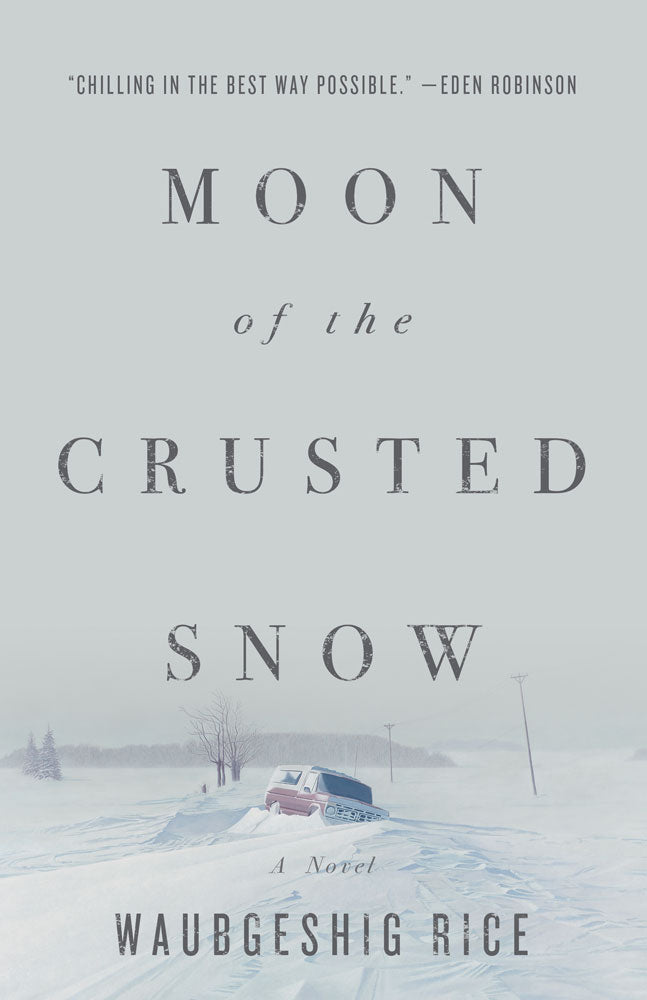
In Waubgeshig Rice’s Moon of the Crusted Snow, a small northern Anishinaabe community loses power and contact with the outside world as winter approaches.
Food supplies begin to dwindle. Anxiety spreads. Then visitors arrive from the south, bringing conflict and the pressures of a collapsing society.
The novel is tense and unsettling, but its most important question is not simply whether the community will survive. It is what kind of future might emerge when the systems people have depended on disappear.
As the crisis deepens, young people and families turn toward the land and Anishinaabe tradition. The novel asks readers to reconsider what an www.thewolfstarpress.comlypse looks like: and whether the end of one society might create space for another way of living.
Find Moon of the Crusted Snow at ECW Press.
5. Future Home of the Living God by Louise Erdrich
Louise Erdrich’s Future Home of the Living God follows Cedar Hawk Songmaker, a pregnant woman living through a www.thewolfstarpress.coml upheaval that appears to be reversing evolution.
As governments and religious authorities respond with fear and control, pregnant women are rounded up. Cedar searches for her birth family and struggles to protect herself and her unborn child.
The novel explores reproductive freedom, environmental crisis, colonial control, and the meaning of identity. Cedar’s connection to her Ojibwe birth family becomes increasingly important as the world around her grows more authoritarian.
Like many Indigenous Futurist works, the novel challenges the idea that the future is a neutral or universal space. Who controls the future? Who is allowed to reproduce, remember, belong, and lead? And what happens when institutions treat living beings as resources rather than relations?
Learn more about Future Home of the Living God from HarperCollins.
What This Means for Readers
Indigenous Futurism invites us to read differently.
It asks us to pay attention to relationships: not only between people, but between people and animals, ancestors, water, forests, and future generations. It asks us to consider stewardship as an active responsibility rather than a background theme.
It also reminds us that hope does not have to be cheerful or simple. In many Indigenous speculative fiction books, hope is work. It www.thewolfstarpress.comrried through language, ceremony, food, memory, humour, kinship, and the decision to www.thewolfstarpress.comring for one another.
Most of all, these stories ask us to think beyond the individual. What are we leaving behind? What knowledge are www.thewolfstarpress.comrrying forward? How might our choices affect the next seven generations?
At The Wolf Star Press, these questions run through both fiction and nonfiction. Of Spirit and Bone is available now for readers looking for Indigenous literary fantasy rooted in prophecy, ceremony, and ancestral memory. The forthcoming Prince of Veya, the opening of the Veya Saga, will offer another journey into epic and speculative fantasy.
For readers who would like a gentler starting point, Reconciliation Over Coffee: 30 Things to Know offers an accessible way into conversations about Indigenous history, reconciliation, and respectful relationships.
The future of fantasy is not only about bigger worlds. It is about deeper relationships with the worlds we already share.